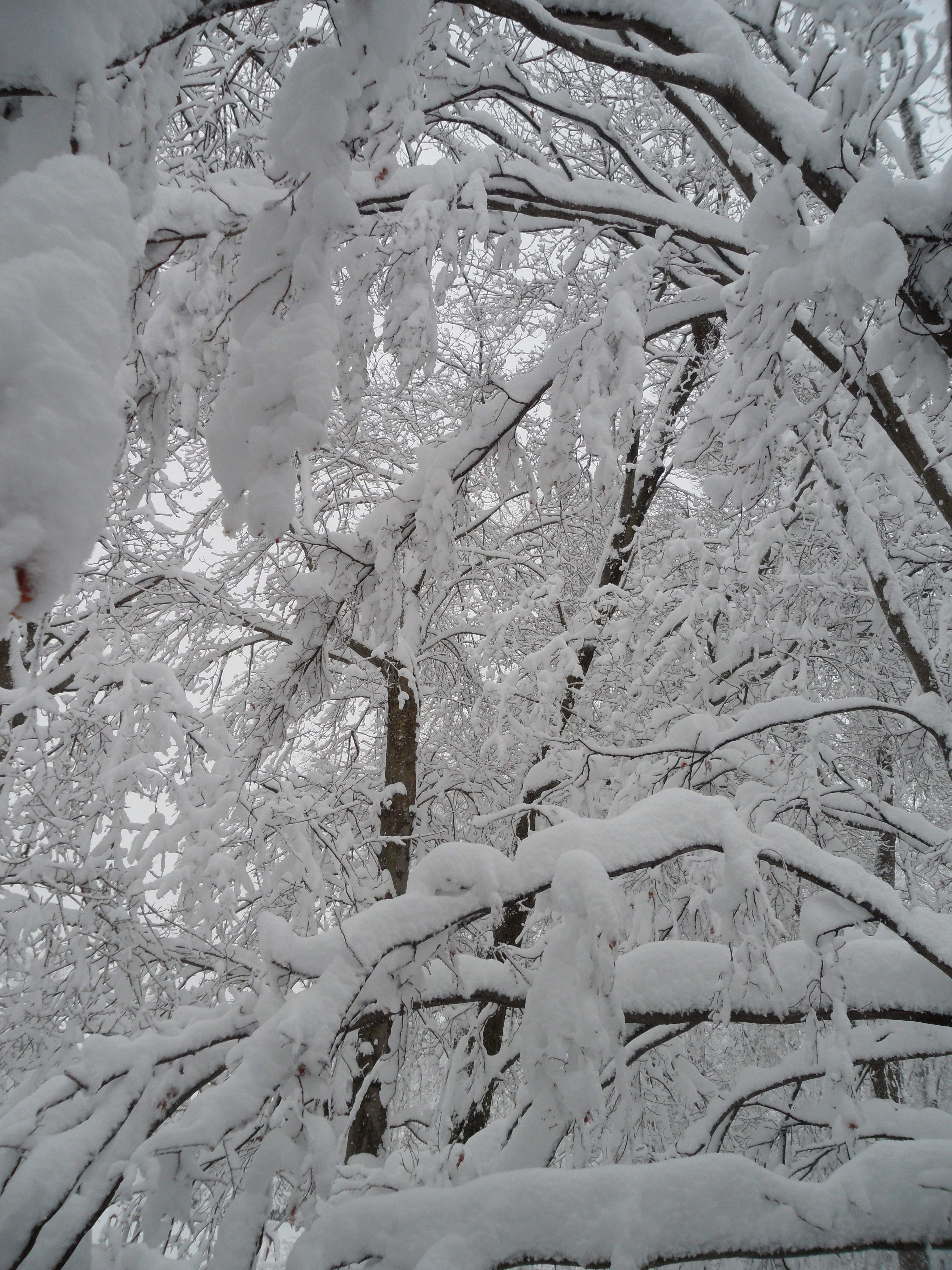
Why prune in winter?
Maple pruning follows general arboriculture principles adapted to Canadian conditions. Several reasons support a preference for winter pruning:
- No active sap flow: During dormancy, sap pressure is minimal. Pruning wounds do not bleed excessively, unlike in spring — especially on red and silver maple.
- Reduced fungal activity: Cold temperatures slow spore production by pathogenic fungi that colonize fresh wounds. Infection risk from agents such as Nectria or Cytospora is lower.
- Visible structure: Without foliage, dead, crossing or poorly oriented branches are immediately visible, which supports precise pruning decisions.
- Spring response: Wounds made during dormancy heal actively at the start of growth, in the first weeks after bud break.
Avoid: Do not prune maples during sap rise (generally March to May depending on region). Sugar and red maple bleed heavily during this period, which does not kill the tree but depletes energy reserves and can attract insects.
Optimal timing by Canadian region
The winter pruning window varies by climate zone:
Pruning techniques
Branch removal pruning
Pruning removes entire branches or sections of branches. On maples, cuts should always be made just outside the branch collar — the slightly swollen tissue at the branch base. Cutting into the collar prevents proper healing and increases rot risk.
The three-cut method is recommended for branches over 5 cm in diameter:
-
Undercut
Make a cut on the underside of the branch, about 30 cm from the collar. Cut to one-third of the diameter. This prevents bark tearing when the final cut is made.
-
Top cut
Cut from above the branch, a few centimetres beyond the first cut, until the branch falls. A long stub remains.
-
Final cut
Remove the stub with a clean cut just outside the branch collar. The wound should be oval, without torn bark.
Reduction pruning
Reduction pruning shortens branch length or tree height by cutting back to a lateral fork of adequate size — at least one-third the diameter of the removed branch. It differs from topping, which is not recommended for maples because it leaves stubs with no natural growth direction and promotes weak shoots.
Crown raising
Crown raising removes lower branches to increase clearance beneath the canopy. For maples in urban or residential settings, gradual raising over several years is preferable to a single heavy intervention.

Tools and precautions
Recommended tools
- Hand pruners: For twigs up to 2 cm in diameter. Clean, sharp blades.
- Pole pruners: For branches 2 to 4 cm out of reach.
- Loppers: For branches 4 to 10 cm in diameter.
- Chainsaw: Reserved for branches over 10 cm — work that requires training and protective equipment.
Tool disinfection
Between each tree — and between each cut if a pathogenic fungus is suspected — blades should be disinfected. A 70% ethanol solution or diluted sodium hypochlorite (10% bleach) is effective. This is particularly important to prevent spread of bacterial canker (Pseudomonas syringae) on maple.
Safety in winter conditions
Pruning in freezing weather presents specific risks: slippery surfaces, brittle branches at low temperature, equipment that loses flexibility. For any work at height or on large trees, a certified arborist is recommended.
The International Society of Arboriculture — Canada chapter (ISA Canada) publishes practice standards and maintains a registry of certified arborists by province.
What not to do
- Do not apply pruning seal or paint to wounds — these products do not promote healing and can trap moisture.
- Do not top maples — topping weakens structure over time and promotes poorly anchored shoots.
- Do not remove more than 25% of foliage in a single season on healthy mature trees.
- Do not prune during extreme cold (below −15 °C) — wood becomes brittle and clean cuts are difficult.

